GoldenArc Pest Experts logoGoldenArc Pest Experts
Fast, upfront pest control services in Nashville, TN, free quote in minutes

Pest Control Services Nashville

When seeking pest control services Nashville homeowners encounter active biology that threatens structural framing and residential health, requiring clinical precision rather than broadcast pesticide applications. GoldenArc Pest Experts deploys targeted exclusion methods, moisture management protocols, and botanical perimeter barriers tailored to the Cumberland River basin climate.
Get your free pest control services quote, Nashville

We only use your ZIP to check availability, no spam.

Subterranean Termite RemediationBrown Recluse Spider ManagementRodent Exclusion and Abatement
Pest Control Services in Nashville, TN
Pest Control Servicesin Nashville, TN

What is Pest Control Services in Nashville, TN?

Pest control services company in Nashville is a specialized environmental remediation practice that eliminates active infestations of wood-destroying insects, venomous arachnids, and vectors through targeted integrated pest management across Davidson County.

Why homeowners choose GoldenArc Pest Experts

  • ✓Initial residential diagnostic evaluations and baseline treatments start at an on-site minimum of $150, which covers full interior harborage inspection and targeted exterior barrier placement.
  • ✓Termite swarm season peaks between March and May across Davidson County, requiring liquid non-repellent soil barriers or monitoring stations to halt subterranean colony wood consumption.
  • ✓Mosquito and outdoor stinging insect calls surge from June through August, often requiring 1 to 2 weeks book-ahead notice for initial barrier treatments along shaded canopy corridors.
  • ✓Rodent exclusion and brown recluse spider mitigation spike from October through December as dropping Cumberland Valley temperatures drive biological vectors indoors into crawlspaces and attics.
Subterranean Termite Remediation
Brown Recluse Spider Management
Rodent Exclusion and Abatement
Our Expertise

Pest Control Services we provide

Every service reflects the same meticulous attention to detail, whether it's a single job or a larger pest control services project across Nashville.
Subterranean Termite Remediation in Nashville, TN

Subterranean Termite Remediation

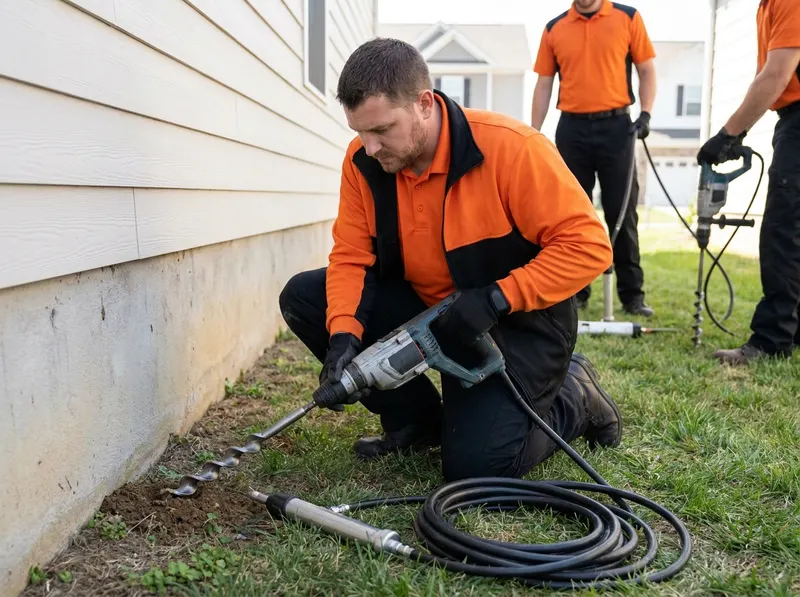
Subterranean termites (Reticulitermes flavipes) cause billions in structural timber damage annually by moving concealed through mud tubes into floor joists, sill plates, and wall studs. Treatment involves trenching perimeter soils down to the foundation footing, injecting non-repellent liquid termiticides such as fipronil, and installing exterior bait monitoring stations every 10 to 15 linear feet to eliminate the subterranean parent colony. Technical protocols follow standards established by the Tennessee Department of Agriculture to ensure comprehensive perimeter soil saturation without impacting native ornamental root systems. Technicians inspect foundation walls for exploratory shelter tubes, test wood moisture content with electronic probes, and apply localized borate solutions to exposed subflooring joists to protect structural load points against future cellulose digestion.

Get a quote →
Brown Recluse Spider Management in Nashville, TN

Brown Recluse Spider Management

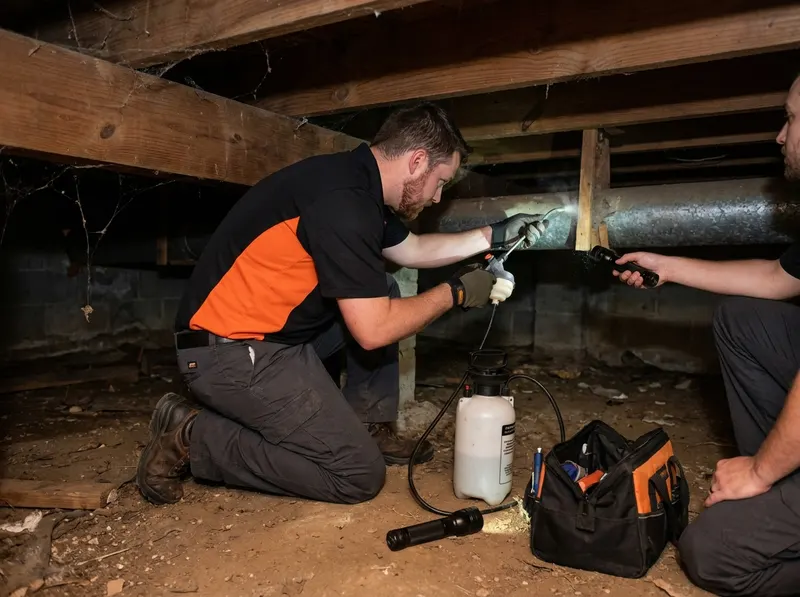
Brown recluse spiders (Loxosceles reclusa) thrive within Middle Tennessee wall voids, drop ceilings, insulation batting, and undisturbed storage closets, posing necrotic bite risks. Eradication requires mechanical harborage disruption, precision application of micro-crystallized pyrethroid or amorphous silica dust inside utility wall penetrations, and high-density perimeter capture boards to monitor population attrition without broadcast aerosol exposure. Remediation protocols incorporate structural guidelines from the Journal of Integrated Pest Management to systematically eliminate prey insect populations while targeting spider harborage zones behind electrical faceplates and baseboards. Monitoring stations remain deployed for 90 continuous days to verify the interruption of immature spiderling development cycles across crawlspaces and living areas.

Get a quote →
Rodent Exclusion and Abatement in Nashville, TN

Rodent Exclusion and Abatement

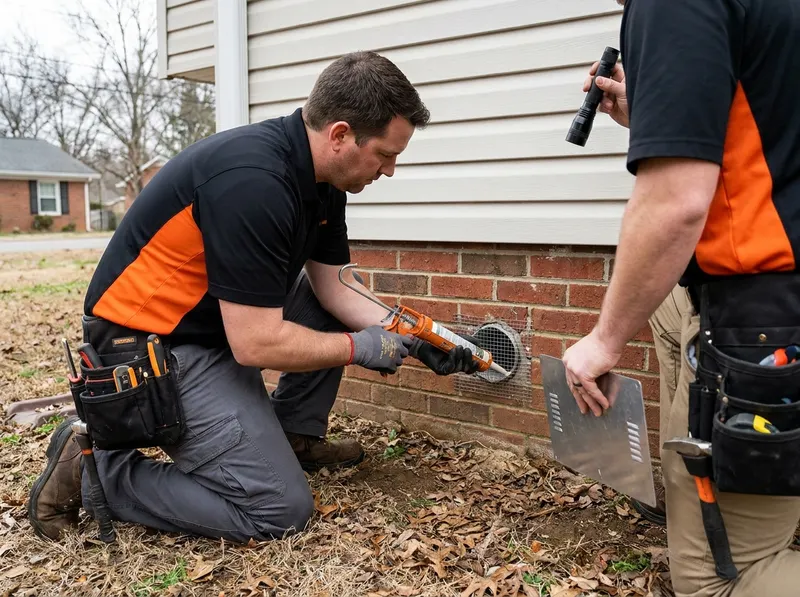
House mice (Mus musculus) and Norway rats (Rattus norvegicus) penetrate structures through foundation gaps as narrow as one-quarter inch, contaminating attic insulation with droppings and chewing electrical conduit. Remediation combines interior mechanical trapping, complete sanitary removal of soiled insulation, and permanent exclusion using 19-gauge galvanized steel hardware cloth and expanding structural foam across all exterior utility breaches. Biological sanitation protocols adhere to Centers for Disease Control and Prevention safety measures, applying hospital-grade disinfectant mists to neutralize airborne pathogens like hantavirus and lymphocytic choriomeningitis before damaged insulation materials are extracted from structural cavities.

Get a quote →
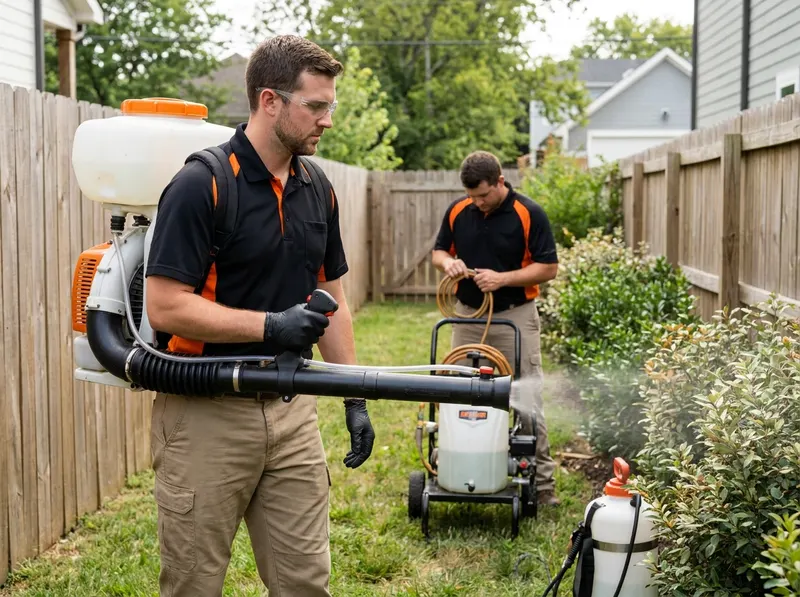
Mosquito and Biting Insect Suppression in Nashville, TN

Mosquito and Biting Insect Suppression

Standing water in gutters, shaded canopy corridors, and low-lying hollows along Middle Tennessee river valleys foster intense mosquito (Aedes albopictus and Culex pipiens) breeding cycles from late spring through early autumn. Suppression targets larval breeding pools using biological Bacillus thuringiensis israelensis (BTI) dunks alongside micro-encapsulated foliage treatments applied directly to resting vegetation under surfaces. GoldenArc Pest Experts aligns application methods with directives from the Environmental Protection Agency Mosquito Control Guidelines , ensuring biological control agents disrupt larval instars in standing water basins without creating non-target runoff into regional freshwater tributaries or municipal storm drains.

Get a quote →
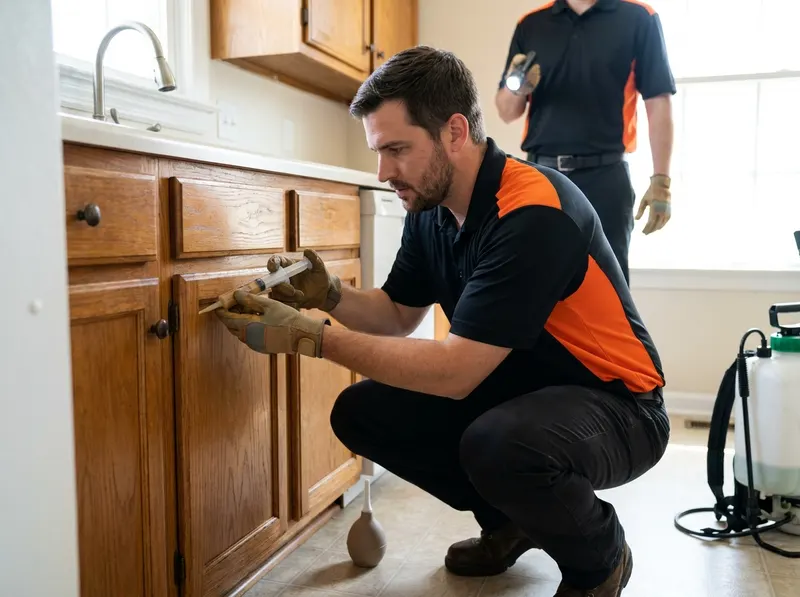
German Cockroach Decontamination in Nashville, TN

German Cockroach Decontamination

German cockroaches (Blattella germanica) infest residential kitchens and plumbing walls, vectoring pathogenic bacteria like Salmonella and triggering acute asthma flare-ups through shed cast skins. Complete decontamination relies on multi-stage insect growth regulators (IGRs) to disrupt chitin synthesis, precision bait rotation targeting structural cabinet hinge recesses, and steam vacuuming of nesting aggregations. The treatment methodology integrates research from the University of Tennessee Extension entomology department, utilizing rotational abamectin and dinotefuran gel matrices to overcome metabolic bait aversion across heavily populated multi-family and single-family kitchen environments.

Get a quote →

Bed Bug Thermal and Contact Eradication in Nashville, TN

Bed Bug Thermal and Contact Eradication

Cimex lectularius populations harbor inside mattress tufts, headboard joints, baseboards, and hardwood floor seams, feeding nocturnal blood meals without entering baited traps. Eradication deploys high-temperature forced air maintaining an ambient lethal threshold above 122 degrees Fahrenheit (50 degrees Celsius) for four sustained hours, coupled with localized contact desiccants behind switch plates and molding. Operations mirror verified protocols published by the University of Kentucky Department of Entomology , utilizing convective thermal sensors to guarantee heat penetrates dense structural wall cavities, box springs, and upholstered furniture cores to achieve complete 100 percent mortality of all egg, nymphal, and adult life stages.

Get a quote →
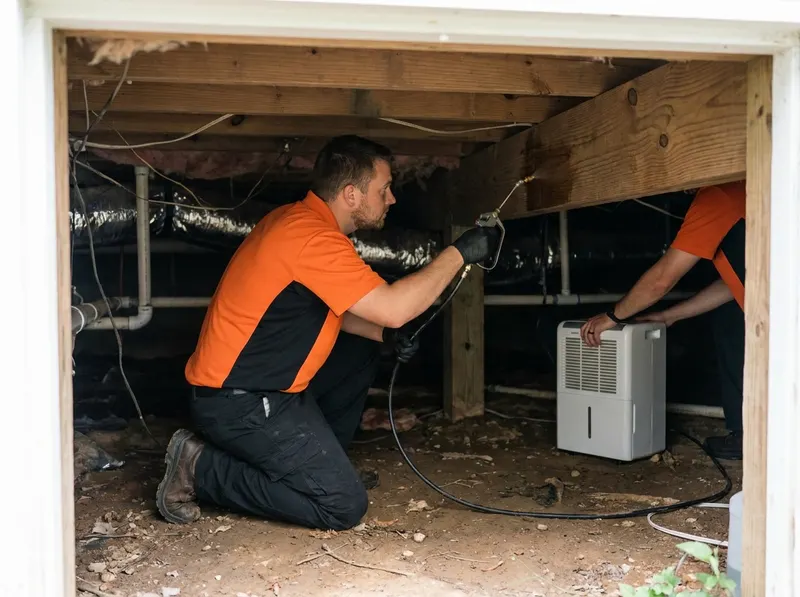
Crawlspace Moisture and Carpenter Ant Mitigation in Nashville, TN

Crawlspace Moisture and Carpenter Ant Mitigation

Elevated humidity within unsealed crawlspaces softens dimensional lumber, attracting black carpenter ants (Camponotus pennsylvanicus) that excavate structural galleries to raise brood. Remediation combines subfloor timber borate treatments, complete 12-mil reinforced vapor barrier encapsulation, crawlspace dehumidifier installations, and perimeter non-repellent transfer insecticides. Field applications correspond with the environmental and building standards supported by the National Pest Management Association , ensuring continuous subfloor relative humidity remains below the critical 50 percent threshold that wood-destroying fungi and opportunistic wood-boring insect species require for gallery expansion.

Get a quote →

Stinging Insect Nest Removal

Paper wasps, bald-faced hornets, and yellowjackets establish aerial and subterranean nests beneath roof eaves, attic soffits, and retaining wall voids, threatening outdoor living spaces. Technicians utilize specialized pressurized dusting lances and protective gear to rapidly neutralize colonies, mechanically excise the nesting structure, and treat the anchoring substrate with residual repellents to deter seasonal reconstruction. All field containment steps align with environmental safety practices outlined by the USDA National Institute of Food and Agriculture , preventing venomous perimeter hazards around entry doorways, second-story gables, and landscape retaining walls while protecting beneficial non-target pollinators active in nearby residential garden beds.

Get a quote →
The essentials

What Nashville customers should know

  • Initial residential diagnostic evaluations and baseline treatments start at an on-site minimum of $150, which covers full interior harborage inspection and targeted exterior barrier placement.
  • Termite swarm season peaks between March and May across Davidson County, requiring liquid non-repellent soil barriers or monitoring stations to halt subterranean colony wood consumption.
  • Mosquito and outdoor stinging insect calls surge from June through August, often requiring 1 to 2 weeks book-ahead notice for initial barrier treatments along shaded canopy corridors.
  • Rodent exclusion and brown recluse spider mitigation spike from October through December as dropping Cumberland Valley temperatures drive biological vectors indoors into crawlspaces and attics.
  • Targeted Integrated Pest Management (IPM) replaces indiscriminate indoor aerosol spraying with structural sealing, humidity reduction below 50 percent, and micro-dosed crevice gel baits.
The GoldenArc Pest Experts standard

Why Nashville keeps calling us back

01

A clear, written price

You get a firm, itemized quote for your pest control services before any work begins, no surprises, no pressure.

02

Your property, protected

Careful prep, tidy work, and a full cleanup when we are done. We treat your home and belongings like our own.

03

One crew, start to finish

The same trusted, background-checked team from the first call to the final check.

Buyer's guide

Choosing the right pest control services pro

Selecting appropriate biological remediation requires matching specific structural vulnerabilities to targeted control methodologies rather than generic calendar spraying. If an interior crawlspace registers relative humidity above 70 percent with visible fungal growth, prioritize encapsulation alongside liquid soil termiticide barriers; if the structure shows dry foundation perimeters, localized physical sealing with galvanized mesh resolves seasonal rodent incursions. Crawlspace encapsulation combined with borate wood treatments requires a higher upfront financial allocation between $1,800 and $5,500, but eliminates the continuous damp microclimate that supports both wood-boring beetles and subterranean dampwood termites.

Conversely, localized exterior chemical perimeter maintenance incurs lower initial expenditures starting at $150 to $320 per quarter, yet fails to resolve moisture-driven pest vectors if subfloor humidity remains untreated. For venomous arachnids like brown recluses living within drywall voids, structural dust injections paired with passive glue interception boards resolve established populations over 60 to 90 days, whereas automated exterior misting systems address only adult flying mosquitoes along property perimeters. Homeowners must balance short-term barrier suppression against permanent biological exclusion: physical exclusion and moisture mitigation permanently eliminate the ecological conditions pests need to survive, whereas recurring chemical-only applications require ongoing operational expenses to suppress incoming populations.

If subterranean termites penetrate structural sill plates, non-repellent liquid soil trenches provide an uninterrupted subterranean barrier lasting 5 to 10 years, whereas localized spot foaming into drywall offers only acute, localized colony interruption. Choosing between baiting systems and liquid chemical soil trenches hinges on property topography: steeply sloping hillside lots near the Highland Rim benefit from bait stations spaced every 10 to 15 linear feet to prevent chemical runoff during heavy spring downpours, while flat slab-on-grade foundations allow continuous perimeter trenching. Structural fumigation is rarely necessary in Middle Tennessee due to the dominant subterranean behavior of local termites, meaning homeowners avoid costly tenting and multi-day property evacuations.

For severe rodent colonizations, ultrasonic repelling devices fail completely against established nesting behavior; long-term resolution mandates heavy mechanical sealing with 19-gauge wire mesh alongside interior snap traps placed directly on active grease runways along sill plates. Property owners evaluating chemical treatments versus non-chemical exclusion must recognize that chemical formulations degrade under ultraviolet radiation and soil bacterial action over 90 to 120 days, whereas physical mechanical exclusion screens out invading vectors for the lifespan of the building envelope.

Investment

Pest Control Services cost and what drives it

Every project gets a firm, written price after a free on-site visit. Ranges below for orientation.

Comprehensive Initial Inspection & Barrier Minimum$150, $320
Quarterly Preventive Maintenance Plan$150, $225 per visit
Subterranean Termite Liquid Soil Trenching & Bait System$950, $2,800
Brown Recluse Spider Remediation Program (3-Month Protocol)$450, $1,250
Full Attic/Crawlspace Rodent Trapping & Physical Exclusion$650, $2,400
Targeted Mosquito Suppression Program (Per Seasonal Treatment)$150, $275
German Cockroach Remediation & Cleanout Protocol$280, $750
Whole-Structure Thermal Bed Bug Remediation$1,200, $3,500
Crawlspace Encapsulation & Borate Wood Barrier Treatment$1,800, $5,500
Exterior Tick & Flea Yard Barrier Application (Per Acre)$175, $385
Active Stinging Insect Nest Neutralization & Physical Removal$185, $425
Powderpost Beetle Subfloor Borate Timber Treatment$850, $2,200
Commercial Integrated Pest Management Monthly Maintenance$195, $650 per month
Free, no-pressure estimate

Get it done right

Tell us about your pest control services job and we'll send a clear, written quote, usually the same day. Or just call and talk to a real Nashville pro.

(629) 319-7848

Get your free pest control services quote, Nashville

We only use your ZIP to check availability, no spam.

Where we work

Areas we serve near Nashville

GoldenArc Pest Experts pest control services team in Nashville, TN

Properties built along the limestone bluffs and clay basins of Davidson County face acute environmental pest pressures due to shallow topsoils, high subterranean humidity, and extensive deciduous tree cover. In historic neighborhoods like Belmont-Hillsboro, Sylvan Park, and East Nashville, raised stone foundations and aging stone crawlspaces regularly trap ambient moisture, creating prime breeding grounds for brown recluse spider colonies and carpenter ants. The geographic presence of the Cumberland River basin creates a unique biological corridor where high water tables saturate alluvial soils across Donelson, Hermitage, and Inglewood, causing subterranean termites (Reticulitermes flavipes) to initiate massive nuptial swarms each spring as soil temperatures exceed 70 degrees Fahrenheit. Karst limestone topography throughout Middle Tennessee generates subterranean fissures and sinkhole networks that offer subterranean rodents and burrowing yellowjackets permanent underground harborages close to residential foundations. In revitalized urban pockets such as The Nations and Germantown, high-density residential construction alongside active historical remodeling projects physically disturbs deep subterranean colonies, driving roof rats and mice out of degraded sewer infrastructures directly into modernized attic soffits and crawlspace vents. Furthermore, properties situated adjacent to expansive recreational green spaces, including Shelby Bottoms Greenway, Centennial Park, Bicentennial Capitol Mall State Park, Cheekwood Estate and Gardens, and Radnor Lake State Park, encounter heavy tick vectors and seasonal wildlife activity that transport parasitic pests directly into perimeter landscaping. Managing pest biology across Davidson County demands customized structural diagnostics that address both the architectural quirks of pre-1940s craftsman bungalows and the specific microclimate moisture burdens created by Tennessee limestone foundations. Homeowners can reach GoldenArc Pest Experts directly by phone at (629) 319-7848 to schedule a comprehensive physical property diagnostic.

East NashvilleGermantownThe NationsGreen Hills12 SouthBelmont-HillsboroSylvan ParkDonelsonHermitageInglewood
Questions

Common questions

Why are brown recluse spiders so prevalent throughout Nashville homes?
Brown recluse spiders (Loxosceles reclusa) thrive natively throughout the Middle Tennessee limestone shelf because regional architectural designs commonly feature vented crawlspaces, complex attics, and hardwood framing that mimic natural dry cavern fissures. Once inside structures across East Nashville or Green Hills, these nocturnal scavengers reproduce within drop ceilings, wall cavities, and cardboard storage boxes, establishing large hidden colonies that require specialized structural dust applications and insect growth regulators to eradicate completely. Routine commercial surface sprays typically fail because brown recluses walk on the tips of their tarsi, minimizing contact with chemical residue on horizontal surfaces.
How frequently should Nashville properties receive preventive termite inspections?
Davidson County sits firmly within the heavy-to-moderate termite infestation zone defined by the Tennessee Department of Agriculture, necessitating an annual visual wood-destroying organism (WDO) inspection for all residential structures. Properties near heavily wooded corridors like Cheekwood Estate and Gardens or Shelby Bottoms Greenway should inspect crawlspaces, foundation sill plates, and exterior masonry ledges every 12 months to detect exploratory mud shelter tubes before subterranean colonies consume load-bearing framing. Early detection through annual acoustic and thermal moisture imaging prevents catastrophic structural repair costs that homeowners insurance policies routinely exclude from standard coverage.
What causes indoor rodent activity to peak during late autumn across Nashville?
Dropping nocturnal temperatures across the Cumberland River Valley between October and November drive native field mice and Norway rats out of agricultural and riverine brush into heated residential structures. Rodents follow thermal air currents escaping through uncapped exterior crawlspace vents, weep holes, and roofline soffit gaps in areas like The Nations and Germantown, exploiting openings as small as a dime to access warm subfloor insulation and interior pantry supplies. Once inside, female rodents reproduce every 21 days, making mechanical exclusion with 19-gauge steel mesh essential before outdoor temperatures drop below freezing.
Are single one-time pest control treatments effective for severe infestations in Nashville?
Single chemical spray applications rarely resolve established infestations of biological pests like German cockroaches, bed bugs, or brown recluse spiders because surface sprays do not penetrate enclosed egg cases (oothecae) or deep structural wall voids. Effective biological control requires a staged protocol: an initial knockdown to eliminate foraging adults, followed by secondary inspections 14 to 30 days later to neutralize newly hatched nymphs before they reach reproductive maturity. Long-term population elimination depends on addressing structural moisture leaks and sealing physical entry breaches rather than relying solely on residual topical insecticides.
What steps prepare a residential home in Nashville for targeted pest exclusion?
Prior to structural exclusion, homeowners should pull vegetation, mulch, and firewood stacks at least 18 inches away from the foundation perimeter, trim overhanging tree branches touching roof eaves, and repair leaking exterior spigots. Inside the home, technicians from GoldenArc Pest Experts require unobstructed access to perimeter baseboards, crawlspace access hatches, attic scuttle covers, and plumbing utility voids beneath sinks so mechanical barriers and monitoring devices can be placed accurately. Eliminating open interior water sources and storing dry food inside airtight glass or hard plastic containers also deprives pests of sustenance during the active remediation phase.
What is the standard procedure for subterranean termite remediation in Middle Tennessee?
Remediating subterranean termites begins with an exhaustive visual and electronic sounding of all crawlspace floor joists, sills, and exterior brick foundation walls to chart active mud galleries. Technicians then dig a continuous six-inch by six-inch trench directly against the interior and exterior perimeter foundation walls, injecting liquid non-repellent termiticide at a standard rate of four gallons per ten linear feet per foot of depth. The treated trench forms an invisible transfer zone where foraging worker termites unwittingly absorb the active ingredient, transporting it deep underground to eradicate the primary queen and entire parent colony over 60 to 90 days.
How does high crawlspace humidity contribute to residential pest infestations in Nashville?
Crawlspaces in Middle Tennessee that maintain ambient relative humidity levels above 70 percent continuously soften structural subflooring and encourage microscopic fungal rot, providing the precise moisture conditions required by carpenter ants and subterranean termites. Saturated subfloors also create ideal breeding harborages for camel crickets, silverfish, and sowbugs, which in turn serve as an abundant primary prey source that attracts and sustains massive brown recluse spider populations. Installing a continuous 12-mil reinforced polyethylene vapor barrier alongside a commercial subfloor dehumidifier drops relative humidity below 50 percent, systematically eliminating the ecological foundation needed for structural pest survival.
Can residential pest control products harm household pets and children?
Modern biological remediation relies primarily on targeted micro-encapsulated formulations, localized crack-and-crevice gel baits, and inorganic mineral dusts that are placed exclusively inside wall voids and mechanical harborages inaccessible to children and pets. When exterior liquid barrier treatments are applied, homeowners and domestic animals simply remain off the treated perimeter lawn or patio until the liquid carrier dries completely, which typically requires 60 to 90 minutes under normal Tennessee weather conditions. Technicians select materials approved under the strict environmental toxicity benchmarks established by federal agencies to maximize biological impact against target arthropods while maintaining residential indoor air quality.
Why do over-the-counter pest foggers often worsen indoor insect infestations?
Over-the-counter total release foggers (aerosol bug bombs) release pressurized pyrethroids directly into the open air of a room, which triggers an involuntary behavioral panic response known as repellency in deep-harboring pests like brown recluse spiders and German cockroaches. Instead of eliminating the colony, the airborne chemical mist forces the insects to scatter deeper into inaccessible wall cavities, ceiling voids, subfloors, and adjoining bedrooms where aerosol mists cannot reach. Once the ambient aerosol settles onto open countertops and floor surfaces within four hours, the displaced insects gradually return, now dispersed across a much wider footprint of the home.
How do roof rats enter residential attics across historic Nashville neighborhoods?
Roof rats (Rattus rattus) are agile structural climbers that utilize dense tree canopies, telephone wires, and climbing ivy trellises to gain access to residential rooflines in neighborhoods like Belmont-Hillsboro and Sylvan Park. From the roof, they exploit warped dormer fascia boards, open ridge vents, uncapped chimney flues, and plastic attic louvers, chewing through soft aluminum or vinyl to access attic insulation. Preventing roof rat incursions requires structural wildlife exclusion, including trimming all tree branches at least six feet away from the roof edge and installing heavy 16-gauge galvanized steel mesh screens over all attic gable vents.
What specific signs indicate an active carpenter ant infestation rather than termites?
While subterranean termites consume cellulose wood fibers directly, carpenter ants (Camponotus pennsylvanicus) merely excavate wood to create clean nesting galleries for their queens and developing larvae. The most distinct structural sign of carpenter ant presence is the accumulation of fine, wood shavings resembling pencil sharpener residue (frass) pushed out of kick-out holes beneath windowsills, door frames, and floor joists. Unlike termite mud tubes that are packed with moist soil particles, carpenter ant frass contains noticeable fragments of discarded insect body parts, dead ant carcasses, and dry wood debris.
What is the typical timeframe required to completely eliminate a severe brown recluse infestation?
Completely eliminating an established brown recluse spider infestation in a Middle Tennessee home generally requires an intensive 60-to-90-day biological remediation program due to the spider's low metabolic rate and prolonged fasting capabilities. Adult brown recluses can survive for over six months without food or water, remaining dormant inside dry wall framing and ceiling insulation. A thorough protocol requires three successive stages: an initial deep structural dusting of all utility voids and attics, continuous monitoring with high-density glue interceptors every 30 days to measure population attrition, and targeted localized touch-ups to eliminate newly emerging spiderlings.

Get started today

Free estimates for Nashville & the surrounding area.

pest control services guides

How much does pest control service cost in Nashville TN?, Complete Guide →What is the average cost for termite treatment in Nashville?, Complete Guide →Can you get same-day pest control services in Nashville?, Complete Guide →Pest Control Services →